
Warehouse District Truck Crashes: Miami Corridor Accidents Explained
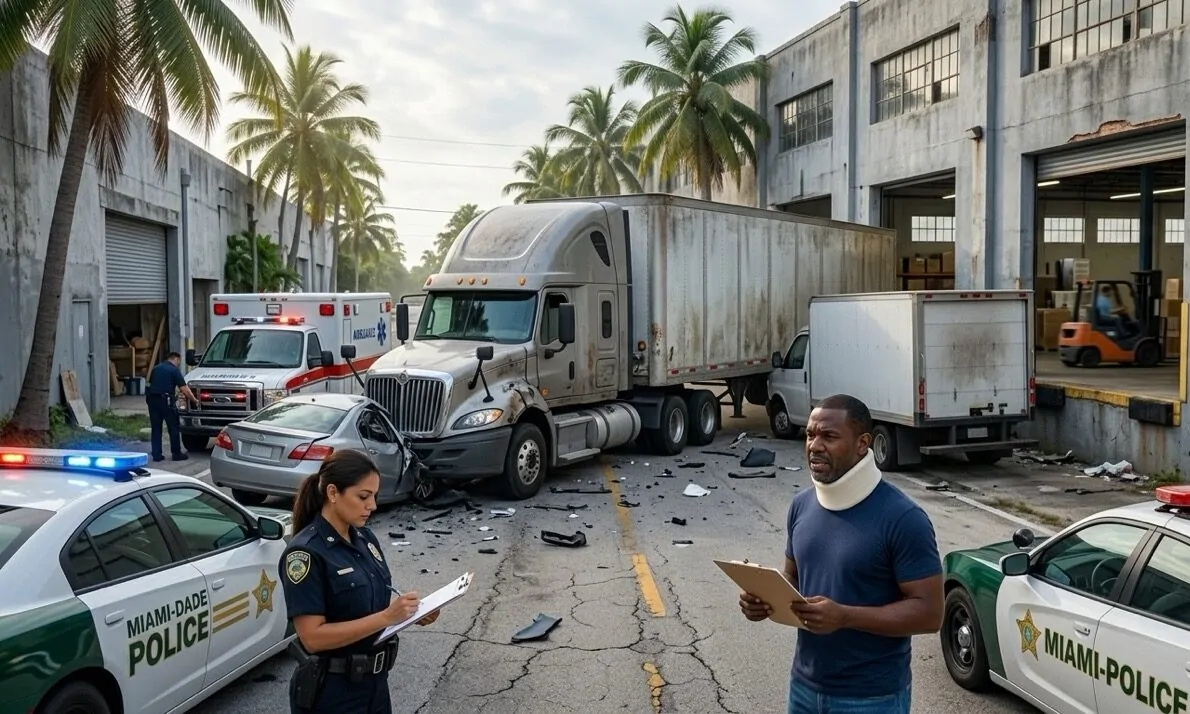
A fully loaded truck backs out of a Hialeah warehouse onto NW 79th Street. The driver never checks mirrors before crossing into traffic. A sedan traveling to work gets crushed between the trailer and a delivery van. Emergency responders find the truck exceeded backing distance limits.
Miami-Dade County operates the largest warehouse and distribution network in Florida. These industrial corridors generate thousands of daily truck trips through Hialeah, Doral, and Medley neighborhoods.
If you suffered injuries in a warehouse district truck crash, a truck accident lawyer in Miami from C.H. Smith Law Firm can help you pursue full compensation. Attorney Courtney Smith, a Florida Bar-licensed personal injury attorney with extensive commercial truck litigation experience, handles these complex cases throughout Miami-Dade County courts and surrounding jurisdictions.
Why Warehouse Districts Create Deadly Truck Accident Patterns
Miami-Dade warehouse corridors operate 24 hours daily serving retail chains, e-commerce fulfillment, and import distribution. Trucks navigate narrow streets designed decades ago when industrial traffic consisted of smaller delivery vehicles. Modern tractor-trailers barely fit through intersections where residential neighborhoods border warehouse properties.
Drivers face intense pressure to meet loading dock appointment windows. Missing scheduled times costs trucking companies hundreds of dollars in detention fees and lost revenue. This economic pressure causes drivers to speed, ignore traffic signals, and make unsafe backing maneuvers. Moreover, warehouse supervisors prioritize loading speed over proper cargo securement and vehicle inspection.
Blind intersections near warehouse entrances create collision zones where trucks emerge suddenly from driveways. Inadequate sight lines prevent passenger vehicle drivers from seeing approaching trucks until impact becomes unavoidable. Furthermore, aging infrastructure including cracked pavement and missing signage compounds dangers from concentrated freight traffic. A truck accident lawyer understands how warehouse operations create predictable crash patterns requiring immediate investigation.
Three High-Risk Miami Warehouse Corridors
Miami’s major warehouse corridors create heavy truck traffic that increases crash risks for nearby drivers. In Northwest Hialeah, the area between Okeechobee Road and NW 103rd Street contains dense warehouse operations. Streets such as NW 79th Street and NW 87th Avenue carry constant truck traffic through residential zones, where wide turns and backing maneuvers often block lanes.
Similarly, Doral’s NW 25th Street and NW 36th Street serve as key freight routes connecting warehouses to the Florida Turnpike. Congestion during shift changes leads to blind spot crashes and intersection conflicts near NW 87th Avenue. Meanwhile, the Medley industrial zone between NW 74th Street and NW 114th Avenue handles intense cargo movement linked to Miami International Airport. Frequent railroad crossings, tight delivery schedules, and hazardous material shipments make this corridor especially dangerous for motorists and nearby communities.
Federal Backing Safety Regulations Warehouse Trucks Violate
Federal Motor Carrier Safety Administration regulations establish specific requirements for backing operations. Drivers must use spotters when backing in areas where pedestrians or vehicles may be present. Backing alarms must function properly and be audible above ambient noise levels. Moreover, drivers must check all mirrors and blind spots before initiating backing maneuvers.
Warehouse District semi-truck accidents in Miami-Dade frequently involve backing violations when companies prioritize speed over safety. Supervisors pressure drivers to back without spotters to save labor costs. Broken or disabled backing alarms go unfixed when companies defer maintenance. Furthermore, inadequate driver training leaves operators unprepared for complex backing situations in congested warehouse areas.
Miami-Dade County and municipal ordinances establish additional backing restrictions on certain streets. These local regulations limit backing distances and prohibit backing across traffic lanes in specific zones. Violations create clear evidence of negligence when crashes occur. A truck accident lawyer subpoenas company policies and training records proving systematic disregard for backing safety.
How Warehouse Loading Schedules Create Dangerous Pressure
Just-in-time delivery models force trucking companies to meet exact loading dock appointment windows. Missing a scheduled time by even minutes costs detention fees, lost revenue, and contract penalties. Warehouse operators maintain strict schedules accommodating dozens of trucks hourly through limited dock space.
Drivers arrive early and stage on residential streets waiting for appointment times. This creates traffic obstructions and visibility hazards in neighborhoods. Moreover, scheduling delays create backup where multiple trucks attempt entering warehouse facilities simultaneously. Drivers make unsafe U-turns, backing maneuvers, and aggressive passing to reach loading docks on time.
Electronic appointment systems track arrival times down to the minute. Companies that consistently miss windows face contract termination or reduced rates. This economic pressure trickles down to drivers who speed, run red lights, and ignore safety protocols. Furthermore, warehouse staff rush loading operations creating cargo securement failures and overweight violations.
Evidence Preservation in Warehouse District Crashes
Miami Warehouse corridor truck accidents require immediate evidence collection before critical information disappears. Warehouse surveillance cameras capture truck movements through parking lots and driveways but recordings overwrite after short retention periods. Loading dock cameras document cargo securement and driver behaviors that prove negligence.
Delivery schedules and appointment systems reveal time pressures that encouraged unsafe driving. Electronic logging devices track driver hours proving whether fatigue contributed to crashes. Moreover, GPS tracking data maps exact routes and speeds through warehouse corridors before impacts occurred.
Loading manifests and bills of lading establish cargo weights showing whether overloading contributed to crashes. Truck maintenance records prove whether companies performed required inspections before vehicles entered service. Furthermore, warehouse safety policies reveal whether companies trained drivers on backing procedures and local traffic regulations. A truck accident attorney subpoenas these records immediately before companies destroy documentation.
Who Pays When Warehouse Trucks Cause Serious Injuries
When a warehouse truck collision happens, the crash often involves more than one company connected to the freight operation.
Several parties may share responsibility for injuries when warehouse truck crashes occur. These entities may be required to pay compensation depending on their role:
Trucking Companies
Trucking companies face liability when drivers act negligently, violate safety rules, or operate poorly maintained trucks entering busy warehouse corridors.Warehouse Operators
Warehouse operators may be responsible when unrealistic loading schedules pressure drivers to rush, skip inspections, or operate vehicles in unsafe conditions.Property Owners
Property owners may face premises liability when poorly designed driveways, blind exits, or unsafe traffic flow create dangerous merging conditions.Distribution Center Managers
Distribution managers become liable when drivers are pressured to violate backing safety rules or operate trucks without proper spotter guidance.Staffing Agencies
Staffing agencies may share liability when temporary warehouse workers lack proper training while operating forklifts or assisting truck maneuvering operations.Freight Brokers
Freight brokers may be responsible when they hire trucking carriers with poor federal safety ratings or histories of trucking violations.Cargo Shippers
Cargo shippers face liability when delivery demands require drivers to violate federal hours-of-service regulations or operate trucks while fatigued.Maintenance Contractors
Maintenance contractors may face claims when poor inspections allow trucks with defective brakes, worn tires, or unsafe equipment onto public roads.Government Entities
Government agencies may share liability when unsafe roadway design, missing signage, or poor traffic control contribute to crashes near warehouse corridors.
Attorney Courtney Smith’s Experience With Warehouse District Cases
Attorney Courtney Smith practices personal injury law with particular focus on commercial truck accident litigation. His experience includes cases involving warehouse operations, federal trucking regulations, and corporate policies prioritizing profits over safety. Years of handling catastrophic injury cases reveal how distribution centers create predictable dangers that companies ignore.
Courtney Smith works directly with accident reconstruction experts who analyze truck movements through congested warehouse corridors. He maintains relationships with former warehouse workers and truck drivers who testify about standard practices versus cost-cutting behaviors. Moreover, his understanding of Federal Motor Carrier Safety Administration regulations helps prove violations establishing clear liability.
Immediate Steps After Warehouse Area Truck Crashes
Warehouse districts stay busy with delivery trucks, forklifts, and freight vehicles moving in and out of loading docks all day. When a heavy truck collision happens in these areas, confusion spreads quickly while critical evidence disappears. Taking the right actions immediately can protect your safety, your documentation, and your legal claim.
Here are the immediate steps to take after a warehouse area truck crash:
1. Call 911 Immediately
Call emergency services and request police response. Officers document the crash, interview drivers, and create an official accident report for investigations.
2. Seek Medical Evaluation
Visit a hospital such as Jackson Memorial Hospital or Kendall Regional Medical Center. Early medical records establish injuries linked directly to the crash.
3. Photograph the Crash Scene
Take smartphone photos showing truck positions, warehouse signage, road conditions, skid marks, and company names visible on trailers or nearby buildings.
4. Collect Witness Information
Speak with nearby witnesses including warehouse workers, drivers, or pedestrians. Record their names, phone numbers, and observations about dangerous driving behavior.
5. Do Not Speak to Insurance Adjusters Alone
Trucking company adjusters quickly contact victims. Avoid recorded statements before speaking with a lawyer who protects your legal rights.
6. Contact a Truck Accident Lawyer Quickly
An attorney can preserve warehouse surveillance footage, secure truck data records, and begin investigating liability before evidence disappears.
What Our Clients Experience
“I had a great experience working with Attorney Smith from start to finish. He was extremely knowledgeable, responsive, and clearly explained every step of the process. I felt well represented and am very satisfied with the outcome of my case. I would highly recommend his services. Thank you again :)”
Stacey C. | Google Review
“You have definitely chosen the perfect attorney if you are reading this review! They work efficient, and effective! Great communication, professional and friendly. I had great results and will always use attorney C.H Smith, if I ever need attorney services in the future. Thank you for a wonderful experience  .”
.”
Charlotte Hilliard | Google Review
Frequently Asked Questions About Warehouse District Truck Accidents
1. Can I sue if a warehouse truck caused my accident?
Yes, truck drivers and companies face liability for negligent operations near warehouse facilities. Federal and state regulations establish clear safety standards creating liability when violations cause crashes.
2. Who is responsible when warehouse trucks back into traffic?
Truck drivers bear primary responsibility, but companies face liability when policies encourage unsafe backing. Warehouse operators may share liability when they design dangerous driveway configurations.
3. How do lawyers prove warehouse pressure caused crashes?
Attorneys obtain delivery schedules, loading dock appointments, and electronic logging data. These records show whether time pressures encouraged unsafe driving behaviors violating federal regulations.
4. What compensation can I recover after warehouse truck crashes?
You can recover medical expenses, lost wages, future care costs, pain and suffering, and disability. Warehouse truck cases often involve multiple defendants with substantial insurance coverage available.
5. How long do I have to file warehouse truck accident claims?
Florida law allows two years from accident dates to file personal injury claims. Missing this deadline permanently destroys legal cases regardless of injury severity.
6. Will insurance companies blame me instead of truck drivers?
Yes, insurers argue passenger vehicle drivers caused crashes rather than commercial trucks. However, attorneys prove truck negligence using federal violation evidence and witness testimony.
7. Can I sue warehouse operators for truck accidents?
Yes, warehouse operators may be liable when they impose schedules encouraging unsafe driving. Corporate policies prioritizing delivery speed over safety create liability in injury cases.
8. What should I do if a warehouse truck hits me?
Call 911, seek medical care, photograph everything, and contact attorneys immediately. Warehouse area evidence disappears rapidly when companies clean crash scenes quickly.
9. How much are Miami warehouse truck accident settlements worth?
Settlement value depends on injury severity, medical costs, and violation proof. Cases involving clear federal violations and catastrophic injuries produce substantial compensation.
10. Do trucking companies face criminal charges for warehouse area violations?
State and federal authorities can prosecute serious safety violations though civil claims proceed independently. Criminal investigations sometimes provide evidence useful in civil injury cases.
Contact C.H. Smith Law Firm About Miami Warehouse Truck Crashes
Miami warehouse corridors generate constant truck traffic through communities never designed for such heavy commercial volumes. Corporate pressure to meet loading schedules creates predictable dangers that companies ignore while prioritizing profits over public safety. You need experienced representation that understands warehouse operations, federal regulations, and how to prove systematic negligence.
C.H. Smith Law Firm investigates warehouse-related crashes, preserves facility evidence, and pursues maximum compensation from all responsible parties. We work on contingency with no upfront costs. Your consultation is free, and you receive clear answers about your rights and next steps.
Plantation Office
7805 S.W. 6th Court, Plantation, FL 33324
Phone: +1 (954) 228-9334
Tampa Office
201 E. Kennedy Blvd, Suite 600, Tampa, FL 33602
Phone: +1 (813) 322-5335
Email: info@chsmithlaw.com
Call now. Warehouse evidence disappears rapidly. Your case cannot wait.
