
No-Zone Collisions: When Trucks Can’t See You in Florida Traffic
A driver traveling along I-95 near Fort Lauderdale moves beside a large tractor-trailer. Traffic slows suddenly ahead. The truck begins merging right without warning. The driver never appears in the truck driver’s mirror at all. Within seconds the trailer pushes the smaller vehicle into the adjacent lane violently.
This is how blind spot (no-zone) truck accidents often occur without warning to victims. Large commercial trucks have extensive blind areas on every side of the vehicle. When passenger vehicles enter these zones, truck drivers may not see them before changing lanes. Merging maneuvers happen quickly, giving victims no time to escape the danger zone.
Victims involved in blind spot (no-zone) truck accidents in Florida often face severe injuries. Complex insurance disputes involving trucking companies and corporate insurers delay fair compensation. If you were injured in a blind spot truck crash in Florida, a trucking accident lawyer from C.H. Smith Law Firm can help you navigate complicated claims. We investigate thoroughly, preserve critical evidence, and fight for maximum compensation you deserve today.
What Is a Truck’s No-Zone?
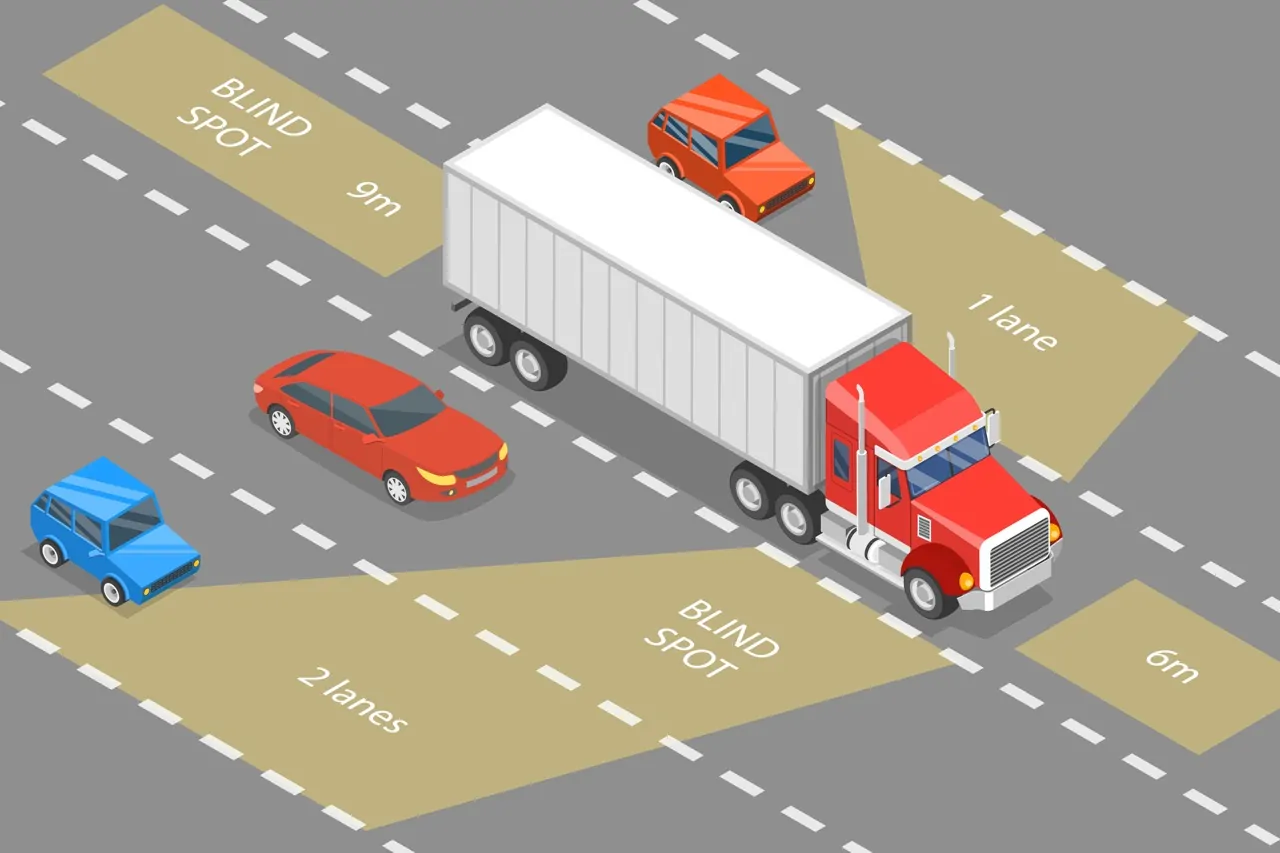
A truck’s No-Zone defines the large blind spot areas surrounding a commercial truck where smaller vehicles disappear from the driver’s mirrors. Because tractor-trailers are longer and taller than passenger vehicles, drivers cannot see every vehicle traveling nearby.
Cars that remain within these blind zones become difficult or impossible for truck drivers to detect during lane changes, turns, or sudden traffic slowdowns. When vehicles linger in these areas, the risk of serious collisions increases significantly, especially on busy Florida highways where large trucks and commuter traffic share the same lanes.
Typical No-Zone areas include four critical zones around every commercial truck:
- Directly Behind the Trailer: Truck drivers cannot see vehicles immediately behind the truck at all. Rear-view visibility is completely blocked by the trailer length. Passenger vehicles following too closely become invisible to drivers completely.
- Along the Right Side of the Trailer: This is often the largest blind spot extending several lanes wide. Trucks turning right cannot see vehicles positioned alongside the trailer. Moreover, this zone extends from the cab to the trailer’s end.
- Along the Left Side Near the Cab: Vehicles traveling beside the driver may disappear from view partially. This blind spot extends one lane wide on the left side. Passing trucks on the left requires quick movement through this danger zone.
- Directly in Front of the Truck: Large trucks require long stopping distances exceeding 400 feet at highway speeds. Drivers cannot see vehicles directly in front of the cab clearly. Cutting in front of trucks creates immediate collision risks.
These visibility limitations frequently contribute to blind spot (no-zone) truck accidents on Florida highways.
Why Blind Spot Truck Accidents Are So Dangerous
When a truck driver merges or turns without seeing a nearby vehicle, devastating results occur. Side-swipe collisions push passenger vehicles into guardrails or adjacent lanes violently. Vehicles pushed into guardrails suffer crushing damage from the truck’s massive weight. Multi-lane crashes develop when pushed vehicles strike other traffic traveling nearby.
Underride collisions happen when cars slide underneath trailers during side impacts. Because commercial trucks weigh up to 80,000 pounds, smaller vehicles absorb the majority of crash force. Passenger vehicle safety features cannot protect occupants from such massive impacts. Moreover, victims suffer traumatic injuries before they can react to the danger. In many blind spot (No-Zone) truck accidents, occupants sustain catastrophic harm instantly.
Where Blind Spot Truck Crashes Happen Most Often in Florida
Heavy trucking traffic travels through Broward County urban corridors daily connecting ports. Fort Lauderdale sees constant commercial truck traffic near Port Everglades and distribution centers. Plantation experiences frequent no-zone accidents at major highway interchanges and on-ramps. Hollywood, Pompano Beach, and Oakland Park all report blind spot collisions regularly.
Miami-Dade County experiences high truck volumes connecting to PortMiami facilities constantly throughout days. Hialeah’s industrial areas generate constant commercial vehicle traffic through congested urban streets. Miami Gardens and Doral distribution hubs create heavy freight traffic during all hours.
Palm Beach County routes include Boca Raton and West Palm Beach commercial corridors daily. Major freight corridors include I-95, Florida Turnpike, I-595, and US-441 carrying thousands of trucks. Port Everglades freight routes bring concentrated truck traffic through residential neighborhoods regularly. These high-traffic corridors increase the risk of blind spot (No-Zone) truck accidents in Florida.
Common Causes of No-Zone Truck Accidents
Large commercial trucks move through Florida highways and city corridors every day. Yet the massive size of these vehicles creates dangerous blind spots around the trailer and cab. When drivers lose visibility of nearby vehicles, even routine maneuvers can trigger serious collisions. Many of these crashes occur suddenly and leave smaller vehicles with little chance to escape.
The following causes frequently contribute to blind spot (no-zone) truck accidents across Florida roadways:
Unsafe Lane Changes
Truck drivers may merge without checking blind areas thoroughly before moving. Mirrors alone cannot reveal all vehicles positioned alongside trailers completely. Drivers fail to perform shoulder checks before changing lanes on highways. Moreover, aggressive lane changes give passenger vehicles no time to react safely.
Driver Fatigue
Fatigue reduces reaction time and mirror awareness during long hauls across states. Exhausted drivers miss vehicles entering blind spots during routine driving tasks. Hours-of-service violations contribute to tired drivers making critical judgment errors. Furthermore, drowsy drivers fail to check mirrors frequently enough for safety.
Poor Mirror Adjustment
Improper mirror positioning creates larger blind zones than necessary around trucks. Drivers skip pre-trip inspections that would reveal misaligned mirrors requiring adjustment. Vibration during transport knocks mirrors out of proper alignment gradually. Moreover, rental trucks often have mirrors adjusted for previous drivers only.
Distracted Driving
Navigation systems and dispatch communication can divert attention from mirrors constantly. Drivers check phones or adjust GPS while traveling at highway speeds. Electronic logging devices require attention that pulls focus from surrounding traffic. Furthermore, eating or drinking while driving reduces mirror awareness significantly.
Heavy Traffic Congestion
Urban traffic increases the risk of hidden vehicles near trailers constantly. Stop-and-go conditions create frequent lane changes around trucks in tight spaces. Congestion forces passenger vehicles into blind spots with nowhere else to go. These factors frequently contribute to blind spot (No-Zone) truck accidents throughout Florida.
How Florida Law Determines Liability in No-Zone Truck Accidents
Liability isn’t always obvious when vehicles disappear into truck blind spots. Multiple factors determine who bears responsibility for damages after crashes occur. Insurance companies fight aggressively to shift blame onto passenger vehicle drivers completely.
That’s how Florida law assigns fault in no-zone collisions:
- Driver Negligence – Truck drivers must check mirrors and blind spots before changing lanes legally.
- Trucking Company Policies – Companies bear responsibility for inadequate training and pressure to rush deliveries.
- Federal Safety Violations – Hours-of-service breaches and maintenance failures establish clear liability for crashes.
- Roadway Conditions – Poor visibility, inadequate signage, and dangerous merge zones affect fault determinations.
Florida follows modified comparative negligence rules, meaning fault may be shared between parties. Insurance companies often attempt to argue that a driver remained in the truck’s blind spot too long. However, truck drivers bear legal responsibility to ensure lanes are clear before merging. A skilled trucking accident lawyer in Florida evaluates evidence to determine how liability should be assigned.
Evidence That Strengthens a Blind Spot Truck Accident Claim
Strong evidence transforms disputed claims into substantial settlements for injured victims quickly. Trucking companies hide or destroy critical records unless legal action preserves them immediately. Corporate defense teams work fast to minimize liability before victims secure legal representation.
That’s the evidence that wins no-zone truck accident cases:
Truck Dash Camera Footage
Fleet vehicles frequently record roadway activity showing exactly how crashes occurred. Video evidence reveals whether drivers checked mirrors before changing lanes safely. Footage proves truck movements and positions of passenger vehicles at impact. Moreover, dash cameras capture the seconds before collisions that establish fault clearly.
Electronic Logging Device Data
ELD data reveals driver hours and fatigue risk before crashes happened. Federal regulations require commercial drivers to log all driving time electronically. Records show whether drivers violated hours-of-service limits causing exhaustion and errors. Furthermore, ELD timestamps prove exactly when drivers last took required rest breaks.
Truck Mirror Configuration
Investigators examine whether mirrors were adjusted properly before trips began as required. Poorly adjusted mirrors create unnecessarily large blind spots around commercial trucks. Photographic evidence documents mirror positions after crashes for expert analysis later. Moreover, trucking companies must prove drivers performed pre-trip mirror inspections properly.
Traffic Camera Footage
Highway cameras often capture merging collisions as they happen in real time. Florida Department of Transportation maintains cameras along major freight corridors constantly. Footage shows lane positions, speeds, and driver actions before impacts occur. Furthermore, traffic cameras provide independent evidence insurance companies cannot dispute easily.
Witness Statements
Nearby drivers may confirm how the crash occurred from their vantage points. Independent testimony corroborates victims’ accounts of truck movements and lane changes. Witnesses describe whether trucks signaled or checked blind spots before merging. Strong evidence significantly increases claim leverage in blind spot (no-zone) truck accidents substantially.
How Insurance Companies Evaluate Truck Injury Claims
Insurance adjusters don’t simply pay what victims request after truck accidents occur. Corporate insurers employ sophisticated strategies to minimize payouts and protect company profits. Understanding their evaluation process helps victims demand fair compensation from the start.
That’s how insurance companies calculate settlement offers in no-zone cases:
- Severity of Injuries – Catastrophic injuries with permanent disability command higher settlement amounts than soft tissue.
- Clarity of Liability – Clear truck driver fault with strong evidence increases settlement offers significantly.
- Medical Documentation – Detailed records from trauma centers and specialists prove injury extent convincingly.
- Projected Future Care Costs – Life care plans showing lifetime medical needs dramatically increase case value.
In catastrophic injury cases, medical experts may estimate long-term treatment needs accurately. Permanent impairment ratings from doctors establish disability levels affecting settlement calculations directly. Moreover, future surgery projections and ongoing therapy costs get included in demand letters. Detailed documentation often increases compensation potential following Blind Spot (No-Zone) Truck Accidents significantly.
Attorney Courtney Smith’s Experience Handling No-Zone Truck Crash Cases
Attorney Courtney Smith has years of experience handling personal injury cases in South Florida courts. His practice focuses on catastrophic injury litigation involving commercial trucking companies. Litigation experience in Broward County Circuit Court provides strategic advantages during settlement negotiations.
Familiarity with trucking defense strategies helps anticipate and counter insurance company tactics effectively. Investigation of complex commercial vehicle crashes requires understanding federal regulations and industry standards. Attorney Smith works with accident reconstruction experts who analyze no-zone crash mechanics thoroughly. Moreover, he maintains relationships with medical specialists who provide expert testimony in court.
Local experience provides insight into how trucking accident cases are evaluated in South Florida. He understands how Broward County juries view truck accident claims and corporate negligence. Furthermore, his reputation for trial preparation encourages insurance companies to offer fair settlements.
Client Experiences With C.H. Smith Law Firm
“I had a great experience working with Attorney Smith from start to finish. He was extremely knowledgeable, responsive, and clearly explained every step of the process. I felt well represented and am very satisfied with the outcome of my case. I would highly recommend his services. Thank you again :)”
Stacey C. | Google Review
“You have definitely chosen the perfect attorney if you are reading this review! They work efficient, and effective! Great communication, professional and friendly. I had great results and will always use attorney C.H Smith, if I ever need attorney services in the future. Thank you for a wonderful experience  .”
.”
Charlotte Hilliard | Google Review
Frequently Asked Questions About Blind Spot Truck Accidents
1. Do truck drivers check their blind spots before merging?
Truck drivers should check mirrors and blind spots before lane changes, but many fail to do so. Negligent drivers merge without ensuring lanes are clear, causing preventable collisions.
2. Can I recover compensation if I was in the truck’s blind spot?
Yes, truck drivers bear legal responsibility to ensure lanes are clear before merging. A Florida truck crash attorney proves driver negligence using evidence and witness testimony.
3. How do I prove the truck driver didn’t see me?
Dash camera footage, electronic logging data, and witness statements prove driver awareness. Accident reconstruction experts analyze sight lines and mirror positions at impact.
4. What injuries do blind spot truck accidents typically cause?
Crushing injuries, traumatic brain injuries, spinal cord damage, and internal bleeding occur frequently. Underride collisions cause catastrophic harm when cars slide underneath trailers.
5. Will insurance companies blame me for staying in the blind spot?
Yes, insurers often argue victims remained in no-zones too long to shift fault. However, a commercial truck accident lawyer counters these arguments with traffic evidence.
6. How long do I have to file a blind spot truck accident claim?
Florida law allows two years from the accident date to file personal injury claims. Missing this statute of limitations deadline permanently destroys your case.
7. Are trucking companies liable for blind spot accidents?
Yes, companies face liability for inadequate driver training and negligent hiring practices. Corporate policies pressuring drivers to rush create dangerous conditions causing crashes.
8. What should I do immediately after a no-zone truck crash?
Call 911, seek medical care, document the scene, and contact a truck accident attorney. Early legal involvement preserves evidence before trucking companies secure it.
9. Can I sue if the truck driver claims they didn’t see me?
Absolutely, truck drivers must take reasonable steps to check blind spots before moving. Failure to see vehicles doesn’t excuse negligence under Florida traffic laws.
10. How much are blind spot truck accident settlements worth?
Settlement value depends on injury severity, medical costs, and liability clarity. A South Florida trucking accident lawyer maximizes compensation through thorough case preparation.
Speak With C.H. Smith Law Firm About a Blind Spot Truck Accident
Blind spot truck crashes destroy lives in seconds and leave families facing uncertain futures. You need experienced legal protection fighting against corporate trucking companies immediately. C.H. Smith Law Firm investigates thoroughly and builds cases proving driver negligence convincingly.
Contact us today for your free consultation about blind spot truck accidents. We work on contingency with no upfront fees required from clients.
Plantation Office
7805 S.W. 6th Court, Plantation, FL 33324
Phone: +1 (954) 228-9334
Tampa Office
201 E. Kennedy Blvd, Suite 600, Tampa, FL 33602
Phone: +1 (813) 322-5335
Email: info@chsmithlaw.com
Call now. Evidence disappears quickly after truck crashes.
