
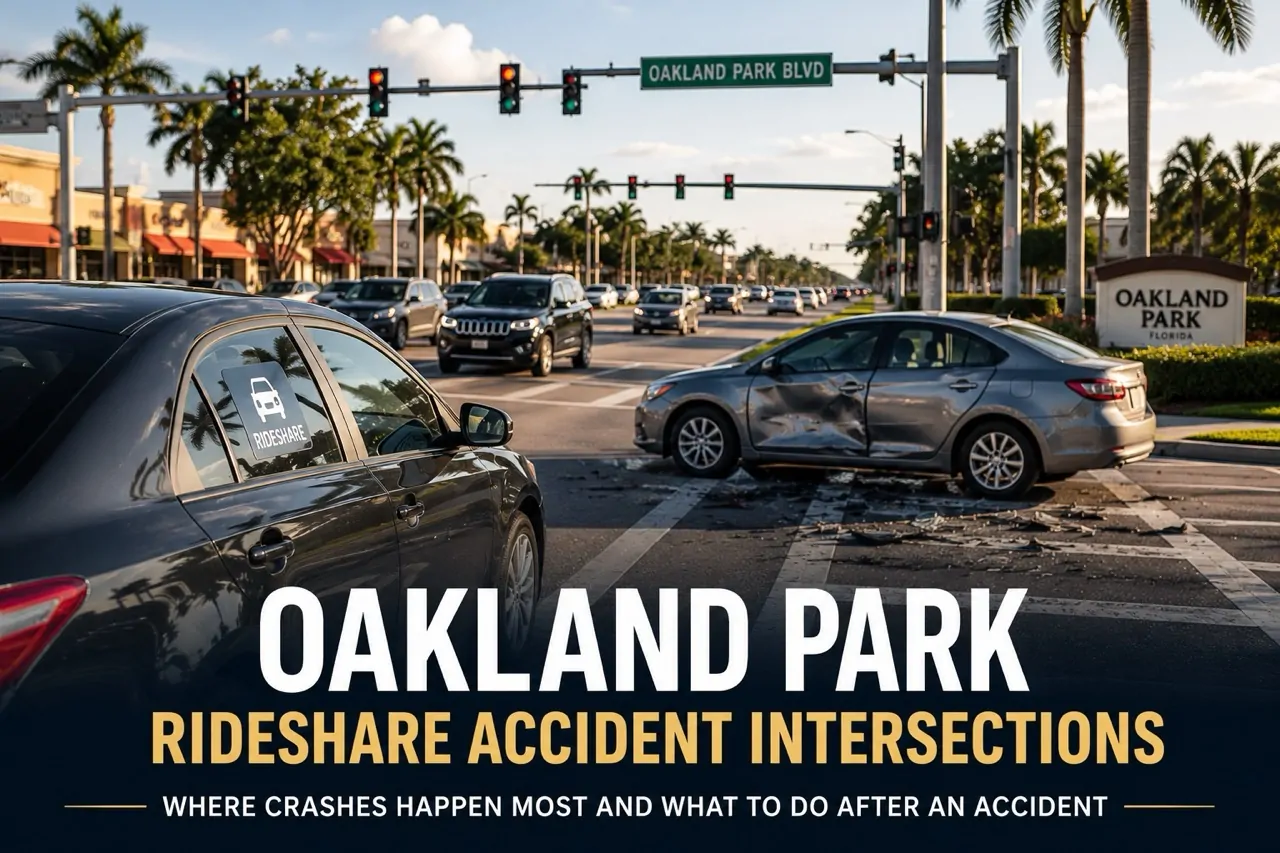
Where Rideshare Crashes Happen Most: Oakland Park Rideshare Accident Intersections
A rideshare driver slows near Oakland Park Boulevard and US-1 to pick up a passenger. Traffic builds behind as the vehicle idles in the right lane. Another driver tries to pass quickly to avoid the delay. A sudden lane shift leads to a side-impact crash within seconds. The rideshare passenger suffers whiplash and shoulder injuries from the collision.
This is how rideshare crashes happen in real life at busy intersections. High rideshare demand creates frequent stops that disrupt normal traffic flow. Distracted driving patterns increase risk when drivers focus on apps instead of roads. These crash patterns define many Oakland Park rideshare accident intersections throughout the city. Victims often need guidance from an experienced rideshare accident attorney serving Oakland Park.
C.H. Smith Law Firm represents rideshare accident victims across Broward County. Attorney Courtney Smith, a Florida Bar licensed attorney, handles rideshare and vehicle accident cases in Broward County Circuit Court. He focuses on liability disputes and insurance coverage issues in complex rideshare claims. If you were injured at an Oakland Park rideshare accident intersection, our firm is here to help you pursue fair compensation.
Why Certain Oakland Park Intersections See More Rideshare Crashes
Rideshare drivers stop unexpectedly at pickup locations, disrupting normal traffic flow behind them. Other motorists don’t anticipate these sudden stops and collide with stopped rideshare vehicles. Drivers rely heavily on navigation apps, splitting attention between the road and their screens. This distraction reduces reaction time when traffic conditions change quickly at busy intersections.
High traffic volume and congestion at major intersections increase reaction time pressure for all drivers. Rideshare vehicles add complexity by making frequent stops and lane changes. Mixed local and through traffic creates unpredictable situations when drivers are unfamiliar with the area. Tourists and visitors using rideshare services often provide unclear pickup instructions that confuse drivers. Understanding how liability works in these cases is important, especially in rideshare accident claims across Florida.
Oakland Park Blvd and US-1
Oakland Park Boulevard serves as a major east-west traffic corridor carrying thousands of vehicles daily. The intersection with US-1 sees heavy commercial activity and constant rideshare pickups. Businesses line both sides of the street, creating frequent passenger pickup zones. Drivers make sudden stops near restaurants, shops, and entertainment venues without warning.
Speed differences between through traffic and stopping rideshare vehicles create dangerous conditions. Cars traveling 40 mph approach rideshare vehicles stopped or slowing to 5 mph. Limited space for safe pullover means drivers stop in active traffic lanes. This intersection experiences rear-end collisions almost daily during peak rideshare hours.
Side-impact crashes occur when frustrated drivers attempt to pass stopped rideshare vehicles. They change lanes quickly without checking blind spots adequately. Passengers exiting rideshare vehicles into traffic create additional collision risks. This location represents one of the most problematic Oakland Park rideshare accident intersections in the city.
Oakland Park Blvd and Powerline Road
High congestion during peak hours creates stop-and-go traffic conditions at this major intersection. Multiple lane merges force drivers to make quick decisions about positioning. Turning traffic from all directions increases the complexity of navigating through safely. Rideshare pickups near shopping centers add unexpected stops to an already congested area.
The Shoppes of Oakwood Plaza generates constant rideshare activity throughout the day. Drivers circle parking lots looking for passengers who provide vague location descriptions. This confusion leads to erratic driving patterns and sudden stops. Lane-change collisions dominate crash statistics at this intersection as drivers maneuver aggressively.
Left-turn crashes happen when rideshare drivers rush to reach pickup locations across traffic. They misjudge gaps in oncoming traffic or turn on yellow lights. Multiple turning lanes create confusion about which vehicle has the right of way. Weather conditions and sun glare reduce visibility during certain times of day.
Commercial Boulevard and Andrews Avenue
Dense commercial activity surrounds this intersection, generating heavy pedestrian and vehicle traffic. Retail areas attract frequent rideshare pickups near store entrances and restaurant fronts. High pedestrian movement creates additional hazards as people cross streets unexpectedly. Rideshare drivers focus on finding specific pickup locations rather than watching for pedestrians.
The intersection handles traffic from residential neighborhoods mixing with commercial through traffic. Speed limits change frequently in this area, confusing drivers unfamiliar with the zone. Right-turn conflicts occur when rideshare vehicles stop suddenly to pick up passengers. Following drivers don’t anticipate the stop and cannot brake in time.
Pedestrian-related accidents increase during evening hours when visibility decreases and rideshare demand peaks. Passengers step into traffic lanes to reach their vehicles without checking for approaching cars. This intersection represents a challenging Oakland Park rideshare accident intersection for liability determination. Multiple parties often share fault in crashes occurring here.
Dixie Highway and Oakland Park Blvd
Narrow lanes and older road design limit space for safe vehicle maneuvering. The intersection was built decades ago before rideshare services existed. Frequent braking near intersections creates accordion traffic patterns that lead to rear-end crashes. Rideshare drop-offs happen in unsafe zones because proper pullover areas don’t exist.
Limited visibility around corners prevents drivers from seeing stopped rideshare vehicles ahead. Trees and buildings block sightlines until drivers are dangerously close. Traffic signals change quickly, catching drivers off guard who are watching for passengers. Intersection blocking incidents occur when rideshare vehicles stop in crosswalks or turn lanes.
The combination of infrastructure limitations and modern rideshare traffic creates preventable crashes. Drivers cannot safely navigate the intersection while also managing app notifications and passenger communications. This location sees frequent minor collisions that still result in injuries and vehicle damage.
NE 6th Avenue and Oakland Park Blvd
A mix of residential and commercial traffic creates varied driving patterns at this intersection. Local residents know the area well, but rideshare drivers passing through lack familiarity. Short-distance rideshare trips generate frequent pickups and drop-offs within small geographic areas. Drivers make sudden entry and exit movements without signaling properly.
The intersection handles traffic from quiet residential streets meeting busy Oakland Park Boulevard. Speed differentials between the two road types create collision risks. Rideshare vehicles accelerate quickly from stops to reach destinations blocks away. Low-speed but frequent collisions characterize crash patterns at this Oakland Park rideshare accident intersection.
Parking challenges near the intersection force rideshare vehicles to stop in active traffic. Passengers wait on corners rather than in designated pickup zones. Drivers make illegal turns or block driveways to reach waiting passengers. These behaviors increase accident frequency even though speeds remain relatively low.
How Liability Is Determined in Oakland Park Rideshare Accidents
Determining fault in rideshare intersection crashes requires analyzing multiple factors simultaneously. Driver behavior, traffic laws, and insurance coverage all play critical roles. The complexity increases when rideshare companies and third-party drivers are involved.
Each crash involves unique circumstances that affect legal responsibility:
Driver Negligence
Speeding through intersections violates traffic laws and establishes driver fault clearly. Distracted driving while using navigation apps reduces attention to surrounding traffic. Unsafe stops in active traffic lanes without warning create hazards for following vehicles. Failure to yield right-of-way at controlled intersections demonstrates negligence. Running red lights or stop signs provides clear evidence of traffic violations.
Rideshare Company Coverage
Insurance coverage depends heavily on the driver’s app activity at the crash time. Coverage in Period 1 applies when the app is active but no ride has been accepted. In Period 2, coverage increases once the driver is on the way to pick up a passenger. The highest level of protection comes in Period 3, when a passenger is inside the vehicle. Disputes like these are common in Lyft crash cases, where insurers challenge coverage responsibility.
Third-Party Drivers
Other drivers frequently share fault in Oakland Park rideshare accident intersections. They may run red lights, fail to yield, or follow too closely. Comparative negligence rules in Florida allow recovery even when multiple parties share fault. Identifying all liable parties maximizes potential compensation from various insurance sources.
Liability often involves multiple factors:
- App status at crash time
- Driver behavior and traffic violations
- Insurance coverage layers
- Road conditions and visibility
- Witness and camera evidence
How Attorney Courtney Smith Handles Rideshare Intersection Cases
Attorney Courtney Smith holds an active Florida Bar license and brings years of litigation experience to rideshare cases. He has handled numerous cases in Broward County courts involving complex liability disputes. His experience includes working with accident reconstruction experts who analyze intersection crashes. He understands how rideshare insurance policies work and which coverage applies in different scenarios.
Attorney Smith investigates crash scenes personally to understand intersection dynamics and traffic patterns. He subpoenas rideshare company data including GPS logs and driver activity records. His approach combines thorough evidence collection with aggressive negotiation against corporate insurers. He prepares every case for trial while pursuing favorable settlement outcomes.
Frequently Asked Questions About Rideshare Accidents in Oakland Park
- What are the most dangerous intersections in Oakland Park for rideshare accidents?
Busy corridors like Oakland Park Boulevard and US-1 see frequent crashes due to congestion and sudden stops. - Why do rideshare accidents happen more at intersections?
Drivers stop unexpectedly and rely on apps, which increases collision risk significantly. - Who is liable in a rideshare accident?
Liability depends on driver behavior, app status, and involvement of other vehicles. - Does Uber or Lyft insurance cover accidents?
Coverage applies based on whether the driver was active on the app. - How do I prove fault in a rideshare crash?
Use police reports, app data, witness statements, and camera footage. - What should I do after a rideshare accident?
Seek medical care, document the scene, and contact a lawyer immediately. - Are intersection accidents more dangerous?
Yes, due to multiple traffic directions and higher collision points. - Can multiple drivers be at fault?
Yes, comparative negligence may apply in Florida rideshare cases. - How long do rideshare claims take in Florida?
Timelines vary depending on liability disputes and injury severity. - Do I need a lawyer for a rideshare accident?
A lawyer helps handle insurance complexity and protects your claim.
Speak With C.H. Smith Law Firm About Rideshare Accidents in Oakland Park
Rideshare accidents at busy intersections create complex liability issues involving drivers, companies, and insurers. Understanding coverage periods and fault determination requires legal expertise. Quick action preserves evidence before it disappears.
C.H. Smith Law Firm helps clients understand their legal options after intersection crashes. We investigate intersection crash patterns using local knowledge and technical expertise. Our team pursues full compensation through negotiation and litigation when necessary.
Plantation Office
7805 S.W. 6th Court, Plantation, FL 33324
Phone: +1 (954) 228-9334
Tampa Office
201 E. Kennedy Blvd, Suite 600, Tampa, FL 33602
Phone: +1 (813) 322-5335
Email: info@chsmithlaw.com
