
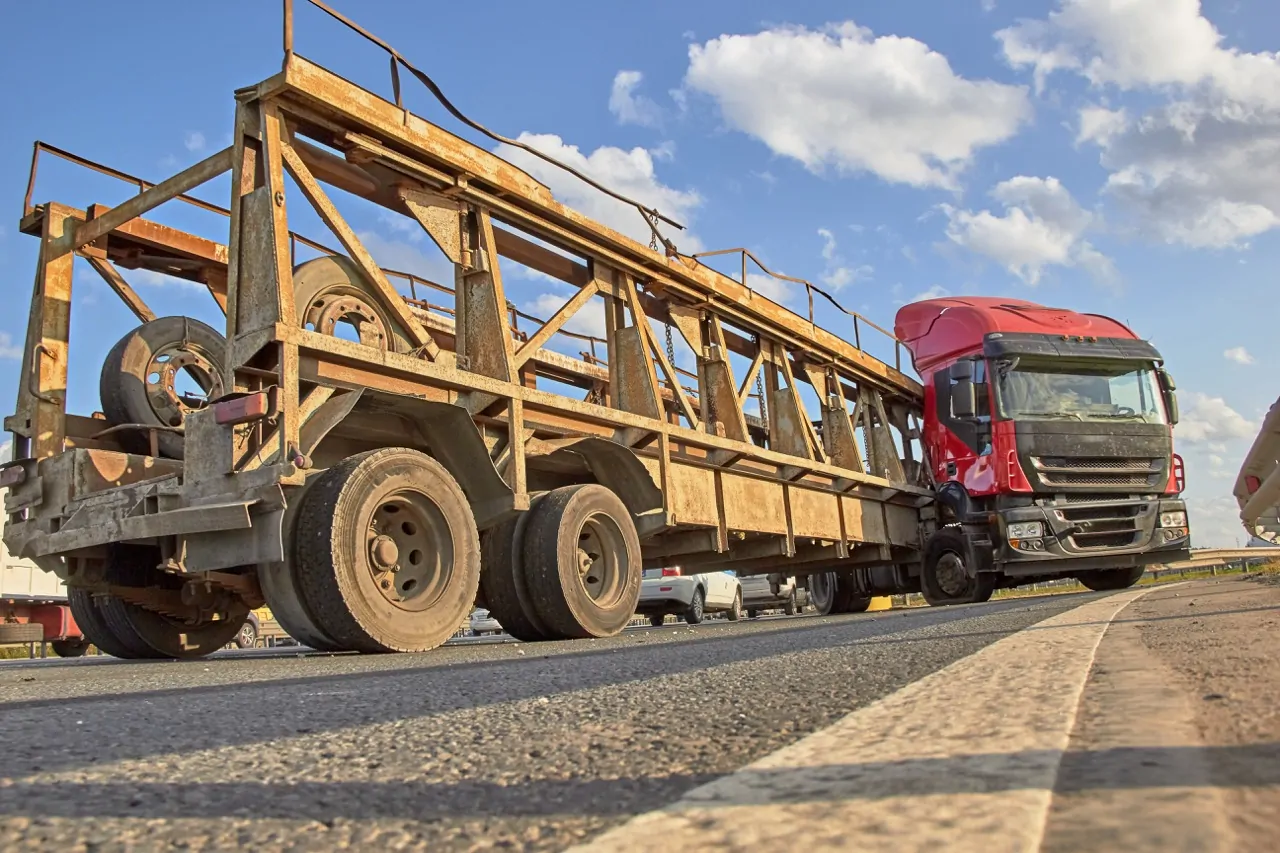
What Florida Victims Need to Know After a Jackknife 18-Wheeler Accident
A tractor-trailer travels southbound on I-95 through Broward County during heavy rain. Traffic slows suddenly near an exit. The driver brakes hard. The trailer swings outward and folds toward the cab. A jackknifed truck blocks three lanes of traffic within seconds. Vehicles behind have no time to react.
This is how Jackknife 18-wheeler accidents happen. These crashes create instant roadway blockages and devastating multi-vehicle collisions. Injuries are often severe. Liability disputes involving trucking companies and commercial insurers follow quickly. Victims face physical recovery while managing a complex legal situation at the same time.
If you have been injured in a jackknife crash, a Jackknife 18-wheeler accident lawyer from C.H. Smith Law Firm can help you identify who is responsible and pursue the full compensation you deserve.
What Causes Jackknife 18-Wheeler Accidents on Florida Highways
Jackknife 18-wheeler accidents in Florida rarely happen without an identifiable cause. Aggressive braking is one of the most common triggers. When a driver brakes hard, the trailer’s forward momentum pushes outward, breaking the alignment between the cab and trailer. Wet roads amplify this risk significantly.
Rain-slicked pavement on I-95 and the Florida Turnpike reduces tire grip, making trailer control far more difficult during sudden stops. Speeding in heavy traffic leaves drivers without adequate distance to slow down safely when conditions change. Uneven cargo distribution shifts weight unpredictably during braking, increasing trailer instability.
Mechanical failures in brake systems or worn tires remove a driver’s ability to stop the vehicle safely. Each of these factors creates the conditions for a catastrophic jackknife crash, and each one points toward a party who may bear legal responsibility.
Why Jackknife Accidents Lead to Multi-Vehicle Collisions
A jackknife crash does not just affect the truck involved. It transforms an entire section of highway into a collision zone within seconds. Other drivers have no realistic opportunity to avoid what follows. Understanding exactly how these secondary disasters unfold helps explain why Jackknife 18-wheeler accidents consistently produce such widespread harm.
When a trailer swings across multiple lanes, surrounding drivers face dangers they simply cannot anticipate or avoid in time. Here is how the crisis escalates:
Lane Blockage Effect
A jackknifed 18-wheeler can block two, three, or even four lanes of highway traffic in a single moment. Drivers approaching the scene at speed have nowhere to go. The size and weight of a commercial trailer makes it physically impossible to clear the roadway quickly. Every second the truck remains across traffic lanes increases the risk of additional collisions.
Chain-Reaction Collisions
Vehicles immediately behind the jackknifing truck have the least time to react. Impact is often unavoidable at highway speeds. Those collisions then push vehicles into adjacent lanes, triggering additional crashes. A single jackknife event can produce a chain-reaction pileup involving a dozen or more vehicles. Each collision adds injured parties and complicates the liability picture.
Limited Visibility
A jackknifed trailer acts as a wall across the highway. Drivers in the lanes behind cannot see what has happened ahead until they are already upon it. Drivers approaching from a distance cannot see that the road is blocked. This creates serious danger on curved sections of I-95 and the Florida Turnpike, where visibility is already limited.
Jackknife crashes create immediate hazards for surrounding drivers. These risks escalate quickly:
- Trucks block multiple lanes at once
- Drivers have limited time to react
- Secondary crashes increase injury severity
- Debris spreads across traffic lanes
- Emergency response becomes more difficult
How Liability Is Determined in Jackknife Truck Accidents
Liability in Jackknife 18-wheeler accidents rarely belongs to one party alone. These crashes involve complex relationships between drivers, companies, cargo loaders, and equipment manufacturers. Identifying every responsible party is critical to recovering full compensation. A thorough investigation starts immediately after the crash.
Here is how liability breaks down across the parties most commonly involved:
Truck Driver Negligence
The driver is often the first party examined. Speeding in wet conditions, following too closely, braking improperly, or operating while fatigued are all forms of driver negligence. When a driver’s behavior directly triggered the jackknife, personal liability attaches. However, driver negligence alone rarely tells the complete story. A trucking accident lawyer in Florida investigates the conditions the company created around that driver before pointing to individual fault alone.
Trucking Company Responsibility
Trucking companies carry significant responsibility for the conditions that produce jackknife crashes. Unrealistic delivery schedules push drivers to speed and skip rest breaks. Inadequate training leaves drivers unprepared for sudden braking scenarios on wet Florida highways.
Deferred maintenance allows brake and tire deficiencies to persist until they cause a crash. When company-level decisions contributed to the accident, the company bears direct liability and its higher insurance policy limits become available to injured victims.
Cargo Loading Errors
Improper cargo distribution often causes jackknife crashes. When weight is uneven across a trailer, each axle responds differently during braking. This imbalance accelerates the trailer’s outward swing during sudden stops. Warehouse operators and loading contractors who failed to follow federal cargo securement standards may be liable alongside the trucking company.
Mechanical Defects
When a brake system failure or tire blowout caused the driver to lose control, the manufacturer of the defective component or the maintenance contractor who serviced the vehicle may bear liability. A truck accident lawyer investigates all contributing mechanical factors in Jackknife 18-wheeler accidents to ensure no responsible party is overlooked.
Evidence That Strengthens a Jackknife Truck Accident Claim
Winning a jackknife truck accident claim takes more than explaining what happened. You need clear, technical evidence that links specific failures to specific parties. Trucking companies control much of this evidence, so quick action matters after a crash.
An 18-wheeler accident lawyer moves fast to secure key evidence before it is changed or lost:
- Black Box Data: The truck’s event recorder shows speed, braking, and driver actions before the crash. It reveals what the driver did in those final seconds.
- Electronic Logging Device (ELD) Records: ELD data shows how long the driver was on the road. It helps uncover fatigue-related violations.
- Accident Reconstruction Reports: Experts study skid marks, impact angles, and road conditions. They explain exactly how the jackknife crash happened.
- Surveillance and Traffic Cameras: Highway and nearby cameras may capture the moment the trailer swings. This footage can disappear quickly if not requested in time.
Why Some Jackknife Accident Claims Get Undervalued
Not every jackknife truck accident claim produces fair compensation. Insurance companies for trucking carriers use specific tactics to lower payouts, and unrepresented victims face the highest risk.
Soft Tissue Injuries Are Minimized
Whiplash, spinal strain, and soft tissue damage are among the most common injuries in jackknife crashes. Because they do not appear on imaging in obvious ways, commercial insurance adjusters routinely dismiss them as minor or pre-existing. Without medical expert testimony establishing the severity and long-term impact of these injuries, adjusters will undervalue them consistently.
Delayed Medical Treatment
Accident victims sometimes delay seeking care because their symptoms feel manageable immediately after the crash. Insurance carriers treat any gap between the accident and medical treatment as evidence that the injuries are not serious. This gap becomes one of the most powerful tools adjusters use to reduce or deny claims entirely.
Lack of Expert Testimony
Establishing liability in a jackknife crash requires more than a police report. Without accident reconstruction analysis, brake system evaluations, and medical expert testimony, the insurer can dispute every element of your claim. Expert involvement is not optional in serious Jackknife 18-Wheeler Accidents. It is what separates a credible claim from one that gets lowballed at every stage.
How a Jackknife 18-Wheeler Accident Lawyer Builds a Strong Case
A 18-wheeler accident lawyer who handles jackknife cases understands that the first days after a crash are the most critical. Evidence disappears fast. Black box data gets overwritten. Maintenance records get altered. Acting immediately is not just strategic. It is necessary.
From the moment C.H. Smith Law Firm takes your case, we secure key evidence and send legal notices to stop trucking companies from destroying records. We bring in accident reconstruction experts early to review trailer movement, braking data, and road conditions before anything changes.
We handle all communication with insurance adjusters and push back against low offers using medical records, expert reports, and clear loss calculations. If the insurer denies responsibility or refuses a fair settlement, we prepare your case for court. A Jackknife 18-wheeler accident lawyer builds your claim with strong evidence and a clear legal strategy.
What Our Clients Experience
“I had a great experience working with Attorney Smith from start to finish. He was extremely knowledgeable, responsive, and clearly explained every step of the process. I felt well represented and am very satisfied with the outcome of my case. I would highly recommend his services. Thank you again :)”
Stacey C. | Google Review
“You have definitely chosen the perfect attorney if you are reading this review! They work efficient, and effective! Great communication, professional and friendly. I had great results and will always use attorney C.H Smith, if I ever need attorney services in the future. Thank you for a wonderful experience  .”
.”
Charlotte Hilliard | Google Review
Frequently Asked Questions About Jackknife Truck Accidents
1. Can I file a claim if I was injured in a jackknife 18-wheeler accident caused by wet roads?
Yes. Wet road conditions do not eliminate liability. If the driver was speeding, following too closely, or braking improperly for the conditions, you can pursue a claim with help from an 18-wheeler accident lawyer.
2. How do I know if the trucking company is liable for the jackknife crash?
Your attorney investigates company maintenance records, driver training documentation, and scheduling practices to determine whether company-level decisions contributed to the crash.
3. How long do I have to file a jackknife truck accident lawsuit in Florida?
Florida generally allows two years from the date of the accident to file a personal injury lawsuit, making early legal action critical to protecting your claim.
4. What compensation can I recover after a jackknife 18-wheeler accident in Florida?
You may pursue compensation for medical expenses, lost wages, future treatment costs, permanent impairment, pain and suffering, and loss of earning capacity.
5. Can a semi-truck accident lawyer get black box data from the trucking company?
Yes. An 18-wheeler accident lawyer can issue an immediate legal hold demanding preservation of black box data, ELD records, and maintenance logs before the company destroys them.
6. What if multiple vehicles were involved in the jackknife crash?
Multi-vehicle jackknife crashes involve complex liability across multiple parties. Your attorney investigates each contributing factor to ensure all responsible parties are identified and pursued.
7. Can I still file a claim if I was partially at fault in a jackknife accident?
Yes. Florida’s comparative negligence law allows you to recover damages even if you share partial fault, though your compensation is reduced by your percentage of responsibility.
8. How does cargo loading affect liability in a jackknife truck accident?
If improperly loaded cargo contributed to trailer instability during braking, the warehouse operator or loading contractor may share liability alongside the driver and trucking company.
9. Does it matter if the truck driver was an independent contractor?
Not necessarily. If the trucking or logistics company controlled the driver’s operations, they may still be liable regardless of how the driver was classified.
10. Why should I contact an 18-wheeler accident lawyer immediately after a jackknife crash?
Evidence from black boxes and surveillance cameras disappears quickly. Contacting an 18-wheeler accident lawyer immediately ensures critical evidence is preserved before it is lost permanently.
Speak With C.H. Smith Law Firm About Jackknife Truck Accidents
Jackknife 18-wheeler accidents create sudden, life-changing consequences for everyone involved. These cases involve complex investigations, multiple liable parties, and aggressive commercial insurance defense. C.H. Smith Law Firm helps injured clients understand their legal options, preserve critical evidence before it disappears, and pursue the full compensation they deserve. Do not face a trucking company and its insurers alone.
Plantation Office
7805 S.W. 6th Court, Plantation, FL 33324
Phone: +1 (954) 228-9334
Tampa Office
201 E. Kennedy Blvd, Suite 600, Tampa, FL 33602
Phone: +1 (813) 322-5335
Email: info@chsmithlaw.com
