
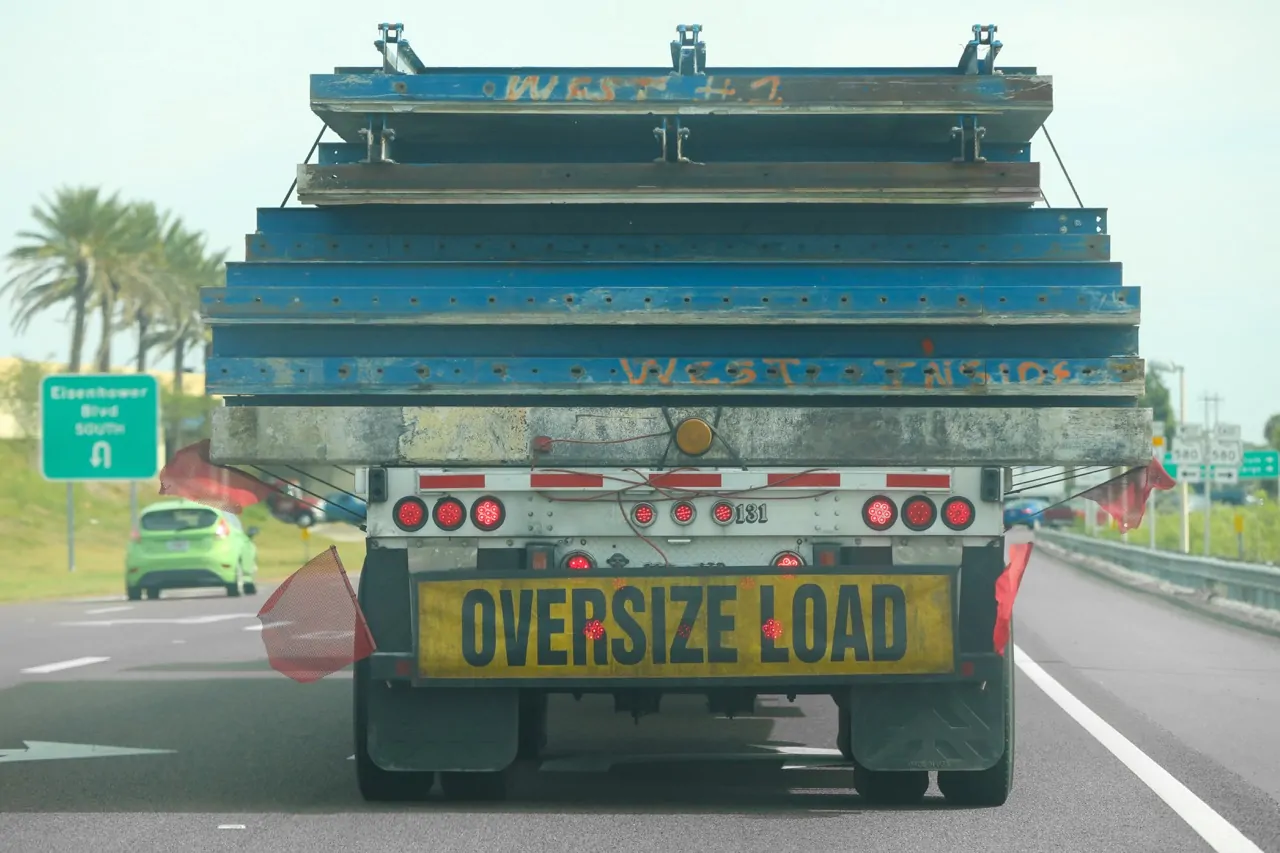
Cargo Shift Crashes: Overloaded Trailer & Cargo Shift Truck Accidents in Florida
A flatbed truck loaded with steel coils travels northbound on Florida’s Turnpike near Miramar. The driver accelerates approaching an interchange. Without warning, improperly secured cargo shifts violently to the right. The truck rolls onto its side, crushing two passenger vehicles and spilling steel across three lanes. Emergency responders find the truck exceeded federal weight limits by 15,000 pounds.
This crash scenario repeats across Florida highways when trucking companies prioritize profits over safety. Overloaded trailer & cargo shift truck accidents create catastrophic injury cases involving federal regulations, corporate negligence, and complex liability questions. When cargo weight exceeds legal limits or shifts during transport, physics takes over and innocent drivers pay the price.
If you suffered injuries in an overloaded truck or cargo shift crash, a truck accidents lawyer from C.H. Smith Law Firm can help you pursue maximum compensation. We investigate federal weight violations, cargo securement failures, and corporate policies that prioritize delivery schedules over public safety. Attorney Courtney Smith, a Florida Bar-licensed personal injury attorney with extensive commercial truck litigation experience, handles these complex cases throughout Broward County Circuit Court and surrounding jurisdictions.
Why Overloaded Trucks and Cargo Shifts Create Deadly Crashes
Overloaded trucks change how commercial vehicles operate on highways. Federal law limits most commercial trucks to 80,000 pounds because braking systems, steering controls, and tires are designed for that weight. When trucking companies exceed these limits, the vehicle’s safety systems cannot perform properly.
First, overweight trucks require much longer stopping distances. Brake systems built for 80,000 pounds cannot safely stop trucks weighing far more at highway speeds. In addition, excess weight places dangerous pressure on tires and suspension systems, which can lead to blowouts or loss of control.
Cargo movement inside the trailer creates another serious risk. When heavy freight shifts suddenly, it transfers weight across the truck and destabilizes the vehicle. As a result, drivers may lose control within seconds. Furthermore, improperly secured cargo can break loose during a crash and strike nearby vehicles, creating additional hazards for surrounding traffic.
Federal Weight and Cargo Securement Regulations
The Federal Motor Carrier Safety Administration establishes comprehensive regulations governing truck weight limits and cargo securement. Part 393 of the Federal Motor Carrier Safety Regulations specifies exact securement requirements for different cargo types. Bridge formula calculations determine maximum allowable weight based on axle configuration and spacing.
Federal law requires specific numbers of tie-downs based on cargo weight and length. Chains, straps, and binders must meet minimum working load limits appropriate for the cargo being transported. Moreover, drivers must inspect cargo securement within 50 miles of origin and every 150 miles or three hours thereafter. Regulations prohibit operating vehicles when cargo shifts enough to affect stability or maneuverability.
Violations of these federal standards create clear evidence of negligence when overloaded trucks or cargo shifts cause crashes. Trucking companies cannot claim ignorance of weight limits or securement requirements established decades ago. Corporate responsibility extends to ensuring proper loading procedures, adequate securement equipment, and driver training on cargo safety.
Where Overloaded Truck Crashes Happen Most Often in South Florida
Overloaded truck crashes occur frequently along major freight corridors in South Florida. In Broward County, heavy cargo traffic moves from Port Everglades through I-595, Fort Lauderdale, Davie, and Plantation, where overweight trucks travel to distribution centers and construction sites. Hollywood, Pompano Beach, and Oakland Park also see crashes involving landscape and delivery trucks carrying shifting loads.
In Miami-Dade, trucks move cargo between PortMiami, Hialeah, Miami Gardens, and Doral, often using State Road 826 and the Florida Turnpike. In Palm Beach County, agricultural and construction trucks travel through West Palm Beach, Boca Raton, Lake Worth, and Boynton Beach, where overloaded vehicles increase crash risks.
Three Types of Cargo That Shift Most Dangerously
Steel Products and Metal Coils
Steel coils, I-beams, and metal sheets create extreme danger when they shift during transport. These materials weigh thousands of pounds per unit and can slice through truck cabs when securement fails. Coils require specific blocking, bracing, and multiple tie-down configurations that many carriers ignore to save loading time. When steel shifts at highway speeds, the momentum overwhelms any attempt at driver control.
Bulk Construction Materials
Gravel, sand, and aggregate materials shift easily when trucks brake or turn sharply. Liquid-like flow characteristics mean these materials redistribute constantly during transport, changing vehicle center of gravity. Dump trucks operating overweight with loose materials create rollover risks during routine maneuvers. Moreover, inadequate tailgate securement allows materials to spill, creating road hazards for following traffic.
Palletized Warehouse Goods
Distribution centers load trailers with palletized products stacked to maximize cubic capacity without regard for weight distribution. Top-heavy loads shift when drivers brake or swerve to avoid traffic. Inadequate blocking between pallet rows allows entire sections to slide during normal driving. Furthermore, shrink wrap and minimal strapping cannot prevent movement of multi-ton pallet loads during emergency maneuvers.
How Investigators Prove Overweight and Cargo Shift Negligence
A routine drive beside a commercial truck can become dangerous when cargo weight or load balance is ignored. Overweight trailers and poorly secured freight create serious stability problems at highway speeds. When a crash occurs, investigators look closely at how the truck was loaded and whether safety rules were followed. Establishing cargo negligence often becomes the key to proving liability in serious trucking accident cases.
This is how investigators prove overweight and cargo shift negligence after a crash involving commercial trucks.
Weigh Station Records – Investigators review weigh station data showing prior violations, which may reveal patterns of repeated overweight operations and ignored safety warnings.
Shipping Documents and Bills of Lading – Cargo paperwork reveals declared load weight. Comparing declared weight with legal limits often exposes intentional overloading.
Loading Facility Surveillance Footage – Cameras at loading docks capture cargo handling procedures, showing whether workers followed proper blocking, bracing, and inspection requirements.
Post-Crash Cargo Engineering Analysis – Engineers inspect the cargo after impact to determine how load securement failed and whether proper tie-down equipment was used.
Truck Scale and Law Enforcement Records – Portable scale measurements taken after crashes confirm actual truck weight and show how far the vehicle exceeded legal limits.
Driver Training and Qualification Files – Driver records reveal whether companies trained drivers on cargo securement rules and whether complaints about unsafe loads were ignored.
Who Pays When Overloaded Trucks Cause Crashes
When trailers carry more weight than federal limits allow, braking distances increase, cargo becomes unstable, and tire or suspension failures become more likely. A single overloaded trailer can trigger multi-vehicle collisions within seconds. These collisions often lead to complex trucking accident investigations involving multiple companies across the freight chain, which means liability rarely falls on one party alone.
In many cases, multiple companies and entities may be required to pay compensation after an overloaded truck crash. Responsible parties may include:
Trucking Companies – Motor carriers may be liable for encouraging overweight loads, ignoring federal weight rules, or failing to supervise drivers and safety policies.
Cargo Loading Companies – Shipping or warehouse operators become responsible when they overload trailers or fail to properly secure cargo before trucks leave facilities.
Cargo Owners and Shippers – Businesses requesting shipments may share liability when they demand illegal load weights or unrealistic delivery deadlines.
Equipment Leasing Companies – Trailer leasing companies may be liable if equipment fails under excessive loads or trailers lack proper weight capacity maintenance.
Manufacturers and Distribution Facilities – Facilities loading their own products face responsibility if they exceed safe weight limits or ignore cargo securement requirements.
Freight Brokers – Brokers arranging shipments may share liability when hiring carriers with known safety violations or histories of weight-related trucking offenses.
Maintenance Contractors – Contractors may face claims if they fail to maintain suspension systems, trailer components, or cargo securement equipment properly.
Government Entities – Liability may arise when dangerous roadway design, inadequate enforcement, or defective road surfaces contribute to overloaded truck crashes.
Federal Bridge Formula and Axle Weight Distribution
The bridge formula calculation determines maximum allowable gross weight based on axle configuration and spacing. This complex formula protects highway infrastructure from damage while limiting dangerous weight concentrations. Trucks with more axles spread over greater distances can legally carry more weight than shorter configurations.
Individual axle weights cannot exceed 20,000 pounds on single axles or 34,000 pounds on tandem axles regardless of total vehicle weight. Weight distribution must comply with both gross vehicle weight limits and individual axle limits simultaneously. Violations occur when companies maximize payload without regard for proper weight distribution across all axles.
Portable scales measure individual axle weights at enforcement checkpoints, revealing improper distribution even when gross weight appears legal. Some carriers load trailers with rear weight bias exceeding legal limits on rear tandems. Furthermore, inadequate or damaged suspension systems allow weight transfer that violates individual axle limits during normal operations.
How Insurance Companies Handle Overweight Truck Claims
Commercial truck insurance policies typically exclude coverage for willful violations of weight limits and cargo securement regulations. Insurers investigate whether companies knowingly operated overweight or ignored securement requirements before providing coverage. Systematic violations discovered during claims investigation may void coverage entirely, leaving trucking companies personally liable.
Adjusters scrutinize loading procedures, company policies, and enforcement history when evaluating overloaded trailer accidents involving semi-trucks in Florida. Clear weight violations combined with catastrophic injuries increase settlement values significantly when coverage applies. Moreover, punitive damages become available when evidence proves companies knowingly endangered public safety for profit.
Defense attorneys attempt to shift blame onto cargo loaders, drivers, or external factors beyond company control. However, federal regulations establish clear corporate responsibility for ensuring legal operations regardless of who actually loads cargo. Expert testimony about industry standards defeats attempts to excuse violations as common practice.
Experienced truck accident attorneys understand how insurers attempt to minimize liability when weight violations are involved.
Attorney Courtney Smith’s Experience With Overloaded Truck Cases
Attorney Courtney Smith handles complex trucking accident cases involving federal safety violations and commercial carrier negligence. His experience in Broward County Circuit Court includes cases involving federal weight violations, cargo securement failures, and corporate policies prioritizing profits over safety. Years of handling catastrophic injury cases reveal how trucking companies systematically violate regulations while maintaining plausible deniability.
Courtney Smith works directly with accident reconstruction experts who analyze cargo shift dynamics and weight distribution failures. He maintains relationships with former truck drivers and industry professionals who testify about standard practices versus corporate cost-cutting. Moreover, his understanding of Federal Motor Carrier Safety Administration regulations helps prove violations that establish clear liability.
What Our Clients Experience
“I had a great experience working with Attorney Smith from start to finish. He was extremely knowledgeable, responsive, and clearly explained every step of the process. I felt well represented and am very satisfied with the outcome of my case. I would highly recommend his services. Thank you again :)”
Stacey C. | Google Review
“You have definitely chosen the perfect attorney if you are reading this review! They work efficient, and effective! Great communication, professional and friendly. I had great results and will always use attorney C.H Smith, if I ever need attorney services in the future. Thank you for a wonderful experience  .”
.”
Charlotte Hilliard | Google Review
Frequently Asked Questions About Overloaded Truck Accidents
1. Can I sue if an overloaded truck caused my accident?
Yes, weight violations establish negligence when proper loading would have prevented crashes. Federal regulations create clear standards that trucking companies cannot ignore without facing liability.
2. Do I need a truck accident attorney after a cargo shift crash?
A truck accident attorney can investigate federal weight violations, cargo securement failures, and corporate safety policies.
3. Who is responsible when cargo shifts and causes crashes?
Trucking companies bear primary responsibility for proper securement regardless of who loaded cargo. Shipping companies and loaders may share liability depending on contractual relationships.
4. What compensation can I recover after overloaded truck crashes?
You can recover medical expenses, lost wages, future care costs, pain and suffering, and disability. Punitive damages may apply when companies knowingly violated weight regulations for profit.
5. How long do I have to file overloaded truck accident claims in Florida?
Florida law allows two years from accident dates to file personal injury claims. Missing this statute of limitations deadline permanently destroys legal cases.
6. Will insurance companies blame me instead of overweight trucks?
Yes, insurers argue driver error caused crashes rather than weight violations. However, an Overloaded Trailer & Cargo Shift Truck Accidents attorney proves negligence using federal violation evidence.
7. Can I sue trucking companies for systematic weight violations?
Yes, patterns of violations prove corporate policies encouraging illegal operations. Prior citations and weigh station records establish knowledge and deliberate disregard for safety.
8. What should I do immediately after cargo shift truck crashes?
Call 911, seek medical care, photograph cargo and damage, and contact attorneys. Cargo evidence disappears rapidly when companies clean up crash scenes.
9. How much are overloaded truck accident settlements worth?
Settlement value depends on injury severity, medical costs, and violation proof. Clear weight violations combined with catastrophic injuries produce substantial six-figure or seven-figure compensation.
10. Do trucking companies face criminal charges for weight violations?
Federal and state authorities can prosecute serious safety violations though civil claims proceed independently. Criminal investigations sometimes uncover evidence useful in civil injury cases.
Contact C.H. Smith Law Firm About Overloaded Truck Crashes
Overloaded trucks and cargo shift crashes destroy families while companies count profits from illegal operations. Corporate defense teams work immediately to hide evidence and minimize liability. You need experienced representation that understands federal regulations, industry practices, and how to prove systematic violations.
C.H. Smith Law Firm investigates weight violations, preserves cargo evidence, and pursues maximum compensation from all responsible parties. We work on contingency with no upfront costs to injured victims.
Contact us today for your free consultation about overloaded trailer & cargo shift truck accidents.
Plantation Office
7805 S.W. 6th Court, Plantation, FL 33324
Phone: +1 (954) 228-9334
Tampa Office
201 E. Kennedy Blvd, Suite 600, Tampa, FL 33602
Phone: +1 (813) 322-5335
Email: info@chsmithlaw.com
Call now. Cargo evidence disappears rapidly. Your case cannot wait.
