
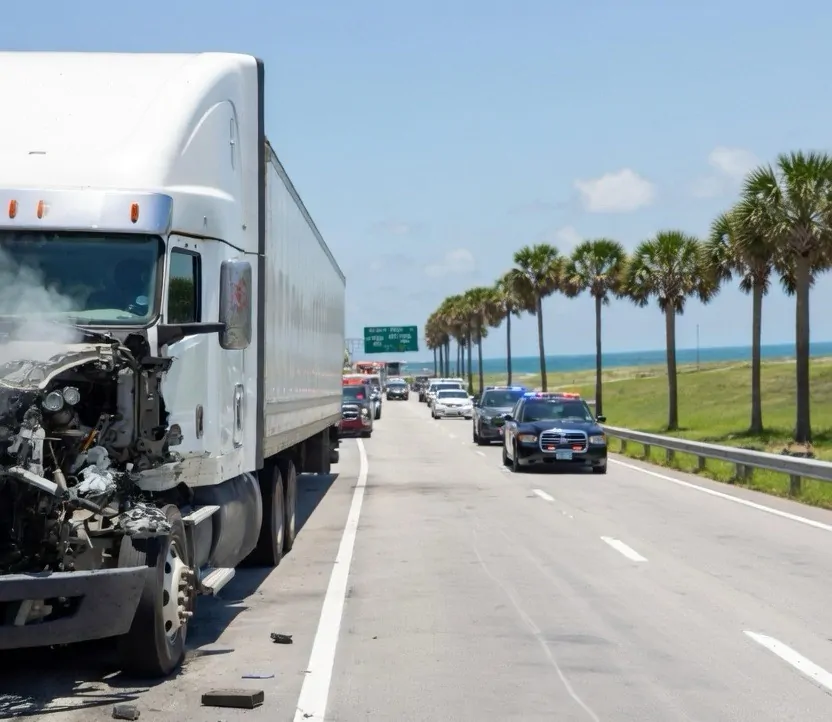
When Brakes Fail: Commercial Truck Accidents Across Florida Highways
Traffic slows suddenly on I-95 near Fort Lauderdale during the afternoon commute. A fully loaded 18-wheeler approaches from behind traveling at highway speed. The driver presses the brake pedal hard, but the truck does not slow. Panic sets in as the massive vehicle barrels forward unstoppably. Within seconds the tractor-trailer barrels into several vehicles, triggering a devastating chain-reaction crash.
This is how brake failure in commercial trucks often unfolds on Florida highways. When braking systems fail, the massive weight of commercial vehicles turns mechanical failure into catastrophic collisions. Stopping 80,000 pounds traveling at 70 miles per hour becomes impossible without functioning brakes. Victims of brake failure 18-wheeler accidents in Florida often face serious injuries, complex liability investigations, and aggressive insurance responses from trucking companies.
If you need help after suffering injuries from brake failure in commercial trucks, a commercial truck accidents lawyer from C.H. Smith Law Firm can help you navigate complicated claims. We investigate thoroughly, preserve critical mechanical evidence, and fight for maximum compensation you deserve. Attorney Courtney Smith, a Florida Bar-licensed personal injury attorney with years of litigation experience, represents victims of commercial truck accidents throughout Broward County courts.
Why Brake Failure Makes Truck Crashes So Dangerous
When braking systems fail on commercial trucks, stopping distance increases dramatically beyond safe limits. Drivers lose complete control during downhill travel when gravity accelerates massive loads. Chain-reaction highway crashes occur when trucks cannot stop before striking slower traffic ahead. Smaller vehicles absorb the majority of crash force from 80,000-pound impacts.
Passenger vehicle safety features cannot protect occupants from such extreme collision forces. Moreover, brake failure crashes often involve multiple vehicles in sequential impacts causing widespread damage. Secondary collisions develop as cars strike each other trying to avoid the truck. Furthermore, fuel fires can erupt when impact ruptures diesel tanks during severe crashes. Because of this extreme weight, brake failure in commercial trucks often leads to catastrophic injuries.
What Causes Brake Failure in Commercial Trucks
Brake failure rarely happens without warning signs that drivers and mechanics ignore. Trucking companies cut maintenance corners to keep vehicles on the road generating revenue. Mechanics skip critical inspections hoping problems won’t surface during trips across states.
These are the common causes of brake system failures:
- Overheated Braking Systems – Continuous braking during downhill driving causes extreme heat that weakens brake components permanently.
- Poor Maintenance – Commercial fleets must inspect braking systems regularly under federal regulations, but neglected maintenance causes sudden failure.
- Worn Brake Pads and Drums – Heavy freight loads accelerate wear on braking components beyond safe operating specifications.
- Air Brake System Leaks – Many commercial trucks rely on compressed air systems where air pressure loss reduces braking effectiveness.
- Improper Cargo Weight Distribution – Overloaded trucks place excessive stress on brake systems not designed for such weight.
These issues frequently contribute to brake failure in commercial trucks across Florida highways daily.
The Most Common Brake Problems Found in Truck Crash Investigations
Investigators often examine several mechanical failures after serious truck crashes. These inspections reveal how brake systems failed before impact. First, worn brake linings and cracked brake drums reduce stopping power. In addition, air compressor malfunctions and brake chamber leaks weaken braking pressure.
Faulty slack adjusters and contaminated brake fluid create delayed response. Meanwhile, broken air hoses and defective ABS systems disrupt control. Misaligned brake components and worn rotors worsen stopping distance. Trucks descending long hills may suffer overheating brakes.
Overloaded trailers increase stress on every braking component. Poor maintenance records often expose neglected safety checks. Many failures appear repeatedly in brake failure 18-wheeler accidents in Florida.
Where Brake Failure Truck Accidents Happen Most Often in South Florida
High-speed freight routes increase crash risks across several South Florida counties daily. Broward County experiences frequent brake failure crashes on I-95 and major arterial roads. Fort Lauderdale sees truck accidents near Port Everglades where heavy freight traffic concentrates. Plantation, Pompano Beach, Hollywood, and Oakland Park all report brake-related truck collisions regularly.
Miami-Dade County’s high truck volumes create elevated brake failure crash risks constantly. Hialeah’s industrial corridors bring heavy trucks through congested urban streets with frequent stops. Miami Gardens and Doral logistics corridors generate constant commercial truck traffic under demanding conditions.
Palm Beach County routes include Boca Raton and West Palm Beach distribution corridors. High-traffic truck routes include I-95, Florida Turnpike, I-595, and Port Everglades freight corridors. Moreover, downhill exit ramps create brake stress that reveals existing mechanical problems. Heavy freight movement increases the risk of Brake Failure in Commercial Trucks throughout South Florida.
What Truck Drivers Should Do If Brakes Fail
Professional truck drivers receive emergency training, but panic often overrides procedure during real brake failures. Seconds matter when 80,000 pounds loses stopping ability on busy highways. Quick thinking prevents catastrophic multi-vehicle crashes from developing during brake system malfunctions.
These are the emergency procedures drivers should follow immediately:
- Shifting to Lower Gears – Engine compression provides additional slowing force when brakes fail during highway travel.
- Using Engine Braking – Jake brakes create significant resistance without relying on friction brake systems.
- Steering Toward Emergency Escape Ramps – Mountain highways provide gravel runaway ramps designed for brake failure emergencies.
- Activating Hazard Lights – Warning surrounding traffic gives vehicles time to clear the path ahead.
- Attempting Controlled Shoulder Stops – Gradually steering onto shoulders uses friction to slow vehicles when brakes fail.
Failure to follow emergency procedures may contribute to liability in commercial truck accidents significantly.
How Liability Is Determined in Brake Failure Truck Accidents
Responsibility may involve multiple parties beyond just the truck driver who crashed. Truck drivers face liability when they ignore warning signs of brake problems. Trucking companies bear responsibility for inadequate maintenance programs and inspection schedules. Maintenance contractors may be liable when they perform substandard brake repairs or inspections.
Vehicle manufacturers face product liability claims when defective brake components cause failures. Cargo loading companies share responsibility when overweight loads stress brakes beyond capacity. Moreover, parts suppliers may be liable for selling defective replacement brake components. Florida law allows injured victims to pursue compensation from all parties contributing to crashes.
Federal Motor Carrier Safety Administration regulations establish minimum brake maintenance standards companies must follow. Violations of these federal rules create clear evidence of negligence in injury claims. Furthermore, inspection records reveal whether companies followed required maintenance schedules before crashes. Determining liability in brake failure in commercial trucks often requires detailed investigation by experts.
Evidence That Strengthens a Brake Failure Truck Accident Claim
Strong evidence separates settled cases from denied claims when brake failure causes crashes. Trucking companies destroy maintenance records and mechanical evidence whenever possible after serious accidents. Corporate legal teams work immediately to minimize liability before victims secure legal representation.
These are the types of evidence that win brake failure cases:
Truck Maintenance Records
Federal regulations require regular brake inspections at specific intervals for all commercial vehicles. Complete maintenance logs show whether companies followed inspection schedules or cut corners. Missing inspection records suggest companies skipped required safety checks before crashes occurred. Moreover, mechanics’ notes reveal whether brake problems were reported but ignored by management.
Electronic Logging Device Data
Driver activity and braking events may appear in ELD records showing brake application patterns. Sudden emergency braking attempts get recorded in electronic systems before crashes happen. Data reveals whether drivers noticed brake problems during pre-trip inspections as required. Furthermore, ELD timestamps prove when drivers last performed required vehicle safety checks.
Event Data Recorder (Black Box)
Truck black boxes capture speed and braking patterns during the seconds before collisions. Recorded data shows whether brake pedal was pressed but brakes didn’t respond properly. Electronic control modules reveal brake system malfunctions and warning indicators before crashes. Moreover, black box evidence proves exactly what happened mechanically during brake failures.
Fleet Maintenance Schedules
Failure to follow inspection requirements may indicate systematic negligence by trucking companies. Corporate maintenance policies reveal whether companies prioritized safety or profits before crashes. Comparative analysis shows whether this specific truck received proper maintenance versus fleet averages. Furthermore, budget documents prove whether companies allocated sufficient funds for brake maintenance.
Expert Mechanical Inspections
Mechanical engineers may analyze failed braking systems to determine root causes of malfunctions. Expert testimony explains technical brake failures to juries in understandable terms clearly. Physical brake component examination reveals wear patterns proving inadequate maintenance before crashes. This evidence can significantly strengthen claims involving Brake Failure 18-Wheeler Accidents in Florida.
How Insurance Companies Evaluate Truck Accident Claims
Insurance companies often review severity of injuries when calculating initial settlement offers. Catastrophic injuries with permanent disability command higher compensation than minor injuries treated quickly. Clarity of mechanical failure evidence affects whether insurers accept or dispute liability claims. Maintenance records proving neglect create strong cases insurance companies cannot easily deny.
Federal safety compliance violations establish clear negligence supporting substantial damage awards from juries. Moreover, expert mechanical analysis validates brake failure claims that insurers might otherwise dispute. Trucking company internal communications reveal whether management knew about brake problems beforehand. Furthermore, prior brake-related incidents involving the same truck or driver strengthen current claims. Severe injuries combined with clear mechanical failure evidence often increase settlement value in commercial truck accidents.
Attorney Courtney Smith’s Experience Handling Brake Failure Commercial Truck Cases
Attorney Courtney Smith practices personal injury law throughout South Florida with extensive trial experience. He litigates complex cases in Broward County Circuit Court where judges respect his thorough preparation. His practice focuses on catastrophic injury cases involving commercial trucking companies and corporate defendants. Investigation of commercial trucking accidents requires understanding federal regulations and mechanical systems thoroughly.
Attorney Smith works directly with mechanical engineers who analyze brake system failures in detail. He maintains relationships with accident reconstruction experts who recreate crashes using physical evidence. Moreover, his experience with Federal Motor Carrier Safety Administration regulations helps prove violations.
Frequently Asked Questions About Brake Failure Truck Accidents
1. Can I sue if a truck’s brakes failed and caused my accident?
Yes, brake failure establishes negligence when proper maintenance would have prevented the malfunction. A Florida truck accident attorney pursues compensation from trucking companies and maintenance contractors.
2. How do investigators prove brake failure caused a truck crash?
Mechanical experts examine brake components, maintenance records, and black box data after crashes. Physical evidence reveals whether brakes were properly maintained before mechanical failures occurred.
3. Who pays for injuries when truck brakes fail?
Trucking company insurance, maintenance contractor liability coverage, or manufacturer policies pay depending on fault. Multiple insurance sources may apply in brake failure cases involving several parties.
4. What compensation can I recover after a brake failure truck accident?
You can recover medical expenses, lost wages, future care costs, pain and suffering, and disability. Catastrophic injuries from brake failure crashes often result in substantial six-figure or seven-figure settlements.
5. How long do I have to file a brake failure truck accident claim?
Florida law allows two years from the accident date to file personal injury claims. Missing this statute of limitations deadline permanently destroys your legal case.
6. Will insurance companies blame me instead of brake failure?
Yes, insurers often argue driver error caused crashes rather than mechanical failure. However, a trucking accident lawyer in Florida proves brake failure using expert mechanical testimony.
7. What if the trucking company claims brakes were properly maintained?
Attorneys subpoena complete maintenance records and have independent experts inspect brake systems. Physical evidence often contradicts company claims about proper maintenance and inspections.
8. Can I sue if the truck driver tried emergency braking procedures?
Yes, proper emergency response doesn’t excuse companies from liability for brake system failures. Driver actions may reduce damages slightly but don’t eliminate trucking company responsibility.
9. What should I do immediately after a brake failure truck crash?
Call 911, seek medical care, document the scene, and contact a semi-truck brake failure crash attorney. Early legal involvement preserves mechanical evidence before trucking companies destroy it.
10. How much are brake failure truck accident settlements worth?
Settlement value depends on injury severity, medical costs, lost income, and liability proof. A truck mechanical failure accident lawyer maximizes compensation through thorough mechanical investigation.
Your Fight Starts Now: Contact Our Brake Failure Truck Crash Lawyers
Brake failure destroys families in seconds and leaves survivors facing years of pain. Medical bills pile up while insurance companies deny responsibility and blame innocent victims. You shouldn’t fight powerful trucking corporations alone during the hardest time of your life.
C.H. Smith Law Firm investigates mechanical failures, exposes maintenance negligence, and wins maximum compensation. We work on contingency with no upfront costs to injured victims. Contact us today for your free consultation about brake failure truck accidents.
Plantation Office
7805 S.W. 6th Court, Plantation, FL 33324
Phone: +1 (954) 228-9334
Tampa Office
201 E. Kennedy Blvd, Suite 600, Tampa, FL 33602
Phone: +1 (813) 322-5335
Email: info@chsmithlaw.com
Call now. Mechanical evidence disappears fast. Your case can’t wait.
